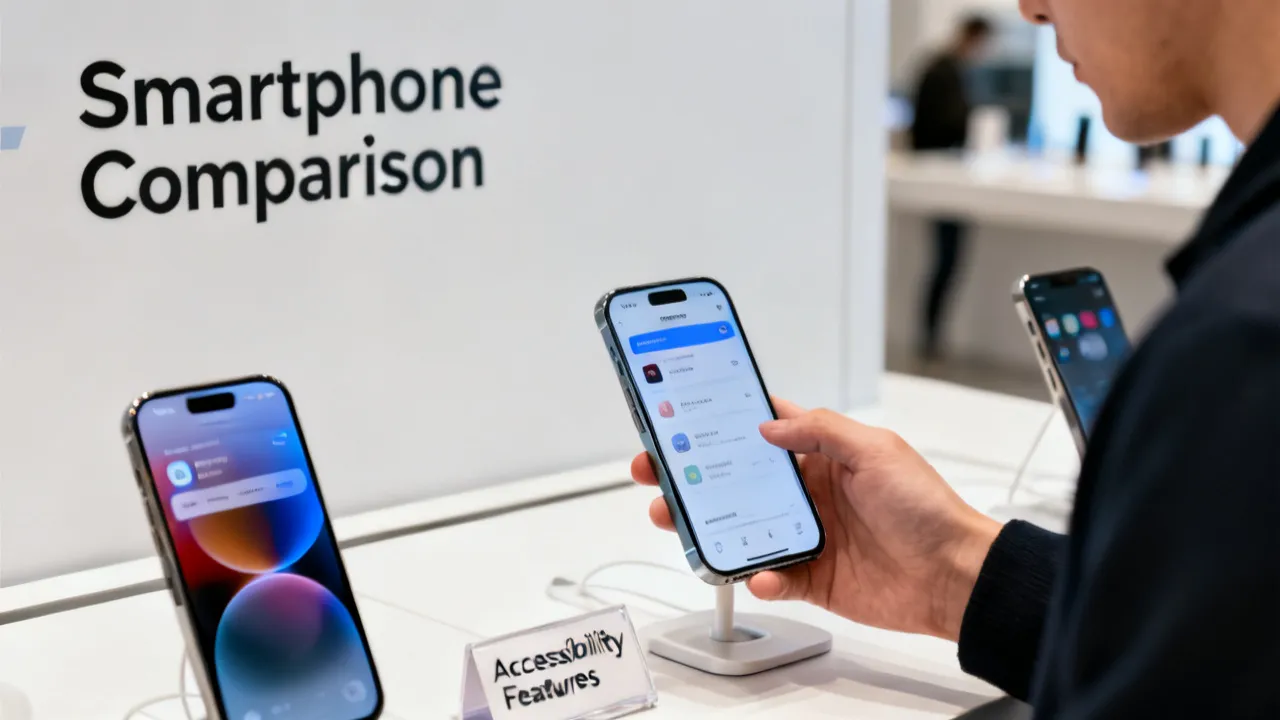
Choosing “I Need a New Phone” Options Wisely
If you’re thinking “I need a new phone,” this guide explains how to evaluate replacement devices, plan trade-offs, and government-supported smartphone programs in the U.S. It provides an objective overview of major Lifeline/ACP-partner providers, including eligibility concepts and how to apply, along with expert checklists for cost, coverage, and device expectations.
Start Here: “I Need a New Phone” — What Matters Very
If you’re at the point where you’re saying “I Need a New Phone”, it usually means one of two things: either your current phone has stopped working the way you need, or your current service/phone combination can’t keep up with daily life anymore. At that moment, it’s easy to get pulled into brand marketing, shiny spec sheets, and “unlimited” promises that sound perfect on day one but disappoint by week two. Instead, your decision should be guided by three practical questions: (1) what device you’ll actually receive (or be able to use), (2) what service features matter to your daily life (calling, texting, and data needs), and (3) whether your household qualifies for government-supported phone benefits under common federal programs such as Lifeline and ACP.
This guide focuses on how to choose responsibly—so you avoid mismatches between a phone’s capabilities and the plan terms, and so you don’t waste time or money on options that don’t fit your real constraints.
When people say “I need a new phone,” the hidden issue is often not the phone model itself. It’s the ability to keep communicating reliably—especially when your phone is how you coordinate childcare, school pick-ups, job applications, appointments, safety contacts, two-factor authentication, and day-to-day navigation. Those tasks aren’t optional. So the best choice is the one that restores those tasks quickly and predictably while staying within your budget.
From an Industry-Expert Lens: Replace the Device, Not Just the Screen
In consumer wireless, device replacement is rarely only about hardware. An expert approach treats the phone + plan as one system: network coverage (voice and data performance), supported device features (SIM/eSIM compatibility, Wi‑Fi calling availability where applicable), and the provider’s provisioning model (whether the phone arrives pre-configured or requires activation steps).
Many people who begin with “I Need a New Phone” discover late that their priority isn’t the phone brand—it’s dependable service where they live and work, plus predictable data for maps, messaging, and school/work use. A phone can be technically “good” on paper, but if it struggles in your neighborhood due to network congestion or uses a data plan that throttles too aggressively, the experience becomes frustrating.
From an expert standpoint, you should think in layers:
- Layer 1: Coverage layer — Can you make calls and send/receive data at home, in your commute path, and in places you frequently rely on (work, school, transit)?
- Layer 2: Provisioning layer — Can the plan activate the phone correctly? Are there compatibility constraints? Is the SIM/eSIM approach straightforward?
- Layer 3: Data behavior layer — If your plan includes “unlimited talk/text” and limited high-speed data, what does “limited” mean for your typical usage? Does it slow after a cap, reduce priority, or require top-ups?
- Layer 4: Phone performance layer — Does the phone support the apps you rely on (messaging, email, maps, banking apps)? Does it have adequate storage and a reasonably up-to-date operating system?
- Layer 5: Longevity layer — How long will it remain secure with updates? Government-supported phones may not match flagship update timelines, but you should still consider update cadence.
That approach prevents the “got the phone, but it doesn’t solve the problem” scenario—where you end up needing another replacement sooner than expected.
What to Check Before Choosing Any Phone Plan
Before comparing devices, plans, or program options, do a quick diagnostic. It doesn’t require advanced telecom knowledge—just honest identification of your needs and constraints.
- Coverage quality where you are very active: Before comparing devices, confirm your area’s network reliability for voice and data. Real-world coverage can differ sharply from marketing coverage maps. If possible, check whether friends/family using the same network have reliable service in your key locations.
- Data type and speed tiers: Some plans emphasize unlimited voice/text with limited high-speed data, followed by reduced speeds. If you rely on video calls or navigation, this matters. A plan that’s “fine” for browsing but not fine for maps in real time can still be a bad fit.
- Latency and usability: Even if a plan says “unlimited data,” the experience may degrade due to throttling, congestion, or hotspot restrictions. If you need reliable connection for job apps or healthcare portals, you should be cautious.
- Device limitations: Government-supported smartphone offerings often focus on practical Android models. Expect trade-offs in camera performance, storage, battery longevity, and update cadence relative to flagship phones. Still, a practical Android can meet daily needs if the software is current enough.
- Upgrade and add-on costs: Premium device upgrades or data boosts may cost extra. Understand what changes automatically and what requires an added purchase. Some people budget for a phone but forget recurring add-on charges.
- Activation and compatibility: If you bring your own device (BYOD), you must ensure it’s compatible with the provider’s network requirements. Compatibility includes not just hardware, but also whether the device can be activated under the provider’s SIM/eSIM procedures.
- Hotspot and tethering: Many plans restrict hotspot use or offer it only on higher tiers. If you use a laptop for school/work or rely on hotspot in emergencies, confirm whether hotspot is allowed and whether it counts against data.
- International roaming or travel needs: If you travel or have family abroad, check whether your plan includes any roaming capabilities or restrictions that affect usability.
- Customer support and activation assistance: Some government-supported workflows are straightforward, while others require careful completion of eligibility steps. Good support can be the difference between activation success and repeated failure.
Government-Supported Smartphone Programs: The Practical Framework
For many eligible households, government-supported phone benefits can reduce out-of-pocket costs for basic wireless service. In the U.S., two widely discussed programs are typically involved:
- Lifeline: Often associated with eligibility concepts based on income thresholds or participation in certain assistance programs.
- ACP (Affordable Connectivity Program): Historically used to support affordable connectivity; eligibility and benefit structure may depend on program availability and current federal/state rules.
Because program rules can be revised over time, your top next step is to read the official provider guidance for the application process and acceptable documentation. Below, the provider comparison summarizes the kinds of plan and device support commonly offered by major Lifeline/ACP-partner providers.
| Official Provider Plan Website | Services Included (Device + Core Service) | Potential Additional Package Costs |
|---|---|---|
| Safelink Wireless | Smartphone access (affordable device or BYOD options depending on circumstances), unlimited text and calls, and data under the provider’s plan rules | Upgrades to premium devices and additional data options may carry charges |
| Assurance Wireless | Android smartphone availability (affordable smartphone program concept), unlimited talk and text, and data allowances under available plan terms | Optional upgrades such as additional high-speed data or certain calling features may cost extra |
| StandUp Wireless | Smartphone access (affordable device or BYOD options), unlimited talk and text, and data plans structured per eligibility and plan availability | Premium device upgrades and extra data are typically available for a fee |
| Access Wireless | Unlimited voice and text, with limited high-speed data under Lifeline-style benefits; connectivity supports may vary with current program participation | Data boosts and device upgrades may involve additional charges |
| True Wireless | Government-supported smartphone access concept, along with voice and data under the provider’s qualifying plan structure | Better-device upgrades or additional data plans may require extra payments |
Source of table information:
www.safelinkwireless.com, www.assurancewireless.com, standupwireless.com, www.accesswireless.com, www.gotruewireless.com.
Note: The table above summarizes the service-type descriptions from each provider’s official materials.
How to Get a Government-Supported Phone: Conditions and Requirements
To pursue a government-supported phone pathway while you’re managing the urgent need behind “I Need a New Phone,” you should understand typical eligibility mechanics and what documentation may be required. While exact rules can vary by state and provider, the following conditions are commonly referenced for Lifeline/ACP-participating programs:
Eligibility Concepts (Common Across Providers)
Even though providers have their own application portals, eligibility often boils down to a few repeating themes. The most important thing you can do is ensure your documentation matches the exact criteria the provider requests—because an “almost correct” document is one of the most common causes of delays.
- Income thresholds: A common structure cited for Lifeline is income at or below 135% of the federal poverty guidelines; for ACP, 200% of the federal poverty guidelines is often referenced.
- Program participation: Eligibility can also be tied to participation in assistance programs such as:
- Medicaid
- SNAP
- SSI
- FPHA
- Tribal land residence: Some eligibility pathways may include additional benefits for households residing on Tribal lands, depending on the applicable program terms.
Step-by-Step Application Guide (Provider-Style Workflow)
In practice, the “how to apply” process usually follows a consistent workflow—submit an application, verify eligibility with documents, and then complete enrollment/activation steps. If your need is urgent, focus on reducing friction: prepare documents early, double-check names and addresses, and plan for waiting time.
- Decide between device receipt vs. BYOD: If you’re eligible for a device, you’ll likely choose a smartphone option; if you’re trying to keep your current hardware, verify whether BYOD is supported.
- Gather documentation: Prepare proof of eligibility. This can include documentation showing participation in qualifying programs or household income information (as required by the provider). Make sure documents are legible and current.
- Submit the online application: Very providers offer an online form. You’ll provide personal details and eligibility information. Enter data carefully—spelling differences can sometimes cause verification problems.
- Upload documents if requested: Many applications require uploading verification documents for approval. Keep file sizes within limits and ensure the entire page is captured.
- Complete verification: Some providers use verification processes such as the Lifeline National Verifier model or equivalent internal checks. Your goal is to pass verification quickly with accurate information.
- Wait for confirmation: After approval, you’ll receive instructions for device shipment or service activation. Note any timelines provided.
- Activate service properly: Activation steps may include SIM setup, account confirmation, and ensuring data/text/calling services provision correctly. If the phone arrives with preconfigured settings, still verify that texts and data work after activation.
Provider Notes: What to Expect When You Apply
Even when eligibility requirements overlap, providers may differ in the practical experience. Here are realistic differences—things an expert would suggest you confirm early. Think of this as planning for “the steps between approval and daily usability.” Many issues happen after eligibility, such as activation mistakes, misconfigured APN settings (in BYOD cases), or incomplete verification.
1) Safelink Wireless — Device Options and Eligibility Uploads
Safelink Wireless is commonly described as offering either a smartphone option or a bring-your-own-device pathway depending on eligibility and availability. The plan structure often emphasizes core connectivity (unlimited talk/text and data within plan terms), while premium device upgrades or additional data can involve added charges.
Applications typically run through the provider website and require proof of eligibility. If you choose a device shipment option, confirm whether the provider includes instructions for activation and whether it provides a SIM/eSIM compatible setup. If you plan to use BYOD, pay extra attention to whether your device is unlocked and compatible. An unlocked phone isn’t always enough; some networks require specific bands or device whitelisting.
Another expert tip: if your current phone still turns on but your screen is damaged, take backup steps before replacement. Copy your contacts if possible and ensure you have access to any accounts protected by SMS or device-based authentication. If the provider offers a new SIM, your number transfer may take time—so plan accordingly.
2) Assurance Wireless — Android Smartphone Availability and Add-On Choices
Assurance Wireless is frequently positioned around an Android smartphone program paired with unlimited talk and text plus data allowances. If you need more than the included data allowance, additional options may be available for purchase.
The application route may be supported through an online flow and/or processes that reference the Lifeline National Verifier approach. Eligibility typically depends on federal or state-specific income guidelines or participation in assistance programs.
Because Assurance-style programs often emphasize Android affordability, consider whether you rely on app versions that require newer Android releases. Many popular apps work on older Android versions, but some banking or verification apps may require newer security updates. If possible, check the device model’s Android version prior to committing. When a program offers a specific device list, match it to your essential apps.
Also, consider battery health: a low-cost phone is still usable, but if the battery is weak you’ll have frequent charging needs, which can be a hardship when you’re managing work, school, or transportation.
3) StandUp Wireless — Affordable Smartphone or BYOD, with Data/Upgrade Fees
StandUp Wireless is often described as supporting affordable smartphone access or BYOD options, alongside unlimited talk/text and a data plan framework. Like many providers, premium device upgrades or added data may come with extra cost.
The application generally includes documentation upload for verification when required. If you are eligible for device receipt, check the shipping timeline so you can plan for the gap between submission and activation.
If you’re doing BYOD, verify two things early: (1) the device is compatible with the carrier network used by the provider and (2) the provider can activate it without extensive manual steps. Some activations are automatic, while others require additional configuration.
Finally, consider whether you need more than calls/text for certain tasks. If you rely on a lot of data for navigation, you may need to plan for limited high-speed data cycles. Many plans provide “best effort” after throttling, meaning streaming can become painful. If navigation is critical, confirm how navigation apps behave under reduced speeds and whether your phone can cache offline maps (Google Maps and other apps sometimes support limited offline downloads).
4) Access Wireless — Unlimited Voice/Text and Limited High-Speed Data
Access Wireless is commonly described as offering unlimited voice and text, with limited high-speed data under qualifying benefit structures. For heavier use cases (e.g., frequent navigation, video streaming, or large file sharing), pay attention to whether your plan includes “limited high-speed” buckets and what happens after they are used.
Providers also commonly offer data boosts and device upgrades for fees. An expert approach is to budget not just for the phone but for potential data-top ups. If you rely on cellular data daily, ask how often boosts are needed and whether boosts are easy to add via an app or customer service.
If you often use streaming, you might also benefit from a “data saver” mindset: stream at lower quality, download content while on Wi‑Fi, and rely on messaging apps that use less data than video calls. That doesn’t eliminate limitations, but it can prevent the “sudden” feeling that the plan stopped working.
5) True Wireless — Government-Supported Phone Pathway
True Wireless is often referenced as providing government-supported phone access with voice and data plans, where eligibility is determined through programs like Medicaid/SNAP or income thresholds. Application approaches may involve completing an online application and receiving support via customer service if needed. Upgrades for better devices or additional data packages can be offered for additional cost.
Because the name “True Wireless” can be confused with general wireless providers, ensure you’re applying through the official channel and that the site URL matches the trusted provider name. Avoid third-party “application assistance” services unless they are clearly authorized, since scams sometimes target people who urgently need phone service.
As with other pathways, confirm activation steps. If your phone number transfer is part of the process, understand whether it takes hours or days and whether there is a temporary number period. If your employer or school depends on SMS, you might want to request email-based verification as well, if available.
Expert Checklist: Selecting the Right Option for Your Real “Phone Need”
When someone says “I Need a New Phone”, they usually have a short window to fix a connectivity gap. Here’s a decision checklist you can use to reduce regret. The goal is not to “win” a spec contest—it’s to restore stable communication without overspending or creating avoidable hassles.
- Define the top 3 tasks: Examples: calling family, receiving job alerts, using maps, or messaging for school. This helps you choose data tiers and device capability. Be specific: “Maps for walking directions” is different from “maps for long drives.”
- Assess your data consumption pattern: If you primarily use Wi‑Fi at home, limited high-speed data may be acceptable. If you rely on cellular for everything, review how data is limited and replenished. Track your past week’s usage (if your current carrier still provides usage totals) to estimate realistic data needs.
- Check device practicality: Ensure the included device supports what you rely on (modern messaging apps, required operating system versions, and essential accessibility features). If you use hearing aids or accessibility settings, test the device’s settings quickly upon receipt.
- Confirm activation timeline expectations: Some programs ship devices after approval, while others provide activation steps immediately. For urgent situations, ask about typical processing time and whether you can track shipments.
- Understand what costs could still apply: Even when core service benefits are supported, premium upgrades or additional data may be priced separately. Determine whether those costs are optional and what the price ranges are.
- Plan for number transfer: If you keep your number, confirm when it transfers and whether there is a period when calls/texts may not work. If you depend on your number for account recovery, plan for temporary interruptions.
- Check voicemail and call forwarding: Some phone replacements change voicemail access. Test voicemail and ensure your contacts can reach you.
- Consider security basics: Make sure the phone can set up a secure lock screen, and ensure you can access critical accounts. If you forget passwords, a new phone may make recovery harder if you lose SMS access.
SEO-Focused Guidance: How to Search Smarter
When searching for “I Need a New Phone” options, many users type broad phrases and then feel overwhelmed. Instead, narrow your search using intent-based terms. This matters because the practical answers are often buried in provider FAQ sections, plan term sheets, or activation guides rather than the promotional pages.
In addition to the phrases listed earlier, try searches that match your situation. Search doesn’t just find information—it helps you avoid confusion between unrelated programs or outdated rules.
- “Lifeline smartphone Android eligibility documentation”
- “ACP connectivity benefit data allowance how it works”
- “BYOD compatibility requirements for government phone programs”
- “unlimited talk and text limited high-speed data plan explanation”
- “Lifeline National Verifier what documents are accepted”
- “how long does Lifeline phone activation take”
- “data boost pricing Access Wireless Lifeline”
- “Safelink unlimited text and calls data speed after limit”
FAQs
FAQ 1: Does “I Need a New Phone” automatically mean I qualify for a government phone?
No. The need for a replacement device is separate from eligibility. Government-supported programs typically require qualifying income levels and/or participation in specific assistance programs. Meeting eligibility is determined during application and verification.
It’s also useful to know that some people qualify for service support but not necessarily for a specific device option. Device availability can vary based on inventory and program terms.
FAQ 2: Can I keep my current phone if I need a new phone?
Often, yes—many programs describe a bring-your-own-device (BYOD) option. However, compatibility is not universal. You should confirm that your device supports the provider’s network requirements and provisioning process.
Unlocked phones can still be incompatible if they do not meet the provider’s device requirements or if they lack required network bands. If you’re unsure, ask the provider about your exact device model and whether they accept it under BYOD.
FAQ 3: What services are usually included in government-supported phone plans?
Commonly referenced services include unlimited talk and text, plus data under provider plan rules. Some plans include limited high-speed data, after which speeds may be reduced. Exact allowances differ by provider and plan.
If your job depends on data (for example, sending attachments, using secure portals, or submitting forms), pay close attention to how reduced speeds affect real tasks. Even if calls/text remain “unlimited,” data performance determines whether you can actually complete work.
FAQ 4: Are there extra costs even if I receive a supported phone?
Potentially. Premium device upgrades, additional high-speed data, or optional features (such as certain calling add-ons) may involve charges. Review the provider’s pricing notes and plan details during or after enrollment.
Also consider secondary costs: if you need accessories (a new charging cable, a case, or a screen protector) after a delivery, those are often out-of-pocket. Plan for them if possible, especially if you are replacing a phone you depend on immediately.
FAQ 5: How do I apply?
Very providers guide applicants through an online application, where you submit eligibility information and proof documents if needed. After approval, you’ll follow activation or shipment steps based on the device option selected.
Some applicants may need to contact support if verification fails due to document mismatches. Having your details consistent (name spelling, address formatting, and household eligibility identifiers) reduces the chance of back-and-forth calls.
FAQ 6: What documentation might be required?
Documentation often relates to household income or participation in qualifying assistance programs (such as Medicaid, SNAP, SSI, or FPHA, depending on the program). Providers specify the acceptable documents and verification requirements in their application instructions.
Commonly, accepted documents may include benefit award letters, enrollment confirmations, or income verification documents. Make sure the documents are readable and include required information such as names, program names, and relevant dates.
FAQ 7: Where can I verify the official application requirements?
For the very accurate, up-to-date requirements, consult the specific provider’s official website and application flow. Program policies can change, and state-level requirements may affect outcomes.
If you see contradictory information across websites, rely on the provider’s official pages and the application prompts you receive during enrollment.
Conclusion: Make Your Next Phone Decision Based on Service Fit
Whether you’re replacing a broken screen, dealing with a device that no longer supports essential apps, or restoring connectivity after a loss, saying “I Need a New Phone” is only the first step. The smartest path is to match your phone choice to coverage, data needs, device practicality, and—if applicable—eligibility for government-supported phone benefits.
If you pursue Lifeline/ACP-partner providers such as Safelink Wireless, Assurance Wireless, StandUp Wireless, Access Wireless, or True Wireless, treat the application as an accuracy exercise: provide correct documentation, understand plan terms, and plan for activation so your phone works the way you expect from day one.
Just as important, plan for the transition. Move your contacts, secure your accounts, confirm voicemail, and test texting/data after activation. A phone replacement can feel like it “should just work,” but small setup steps prevent big disruptions—especially when your phone is used for work, family coordination, and critical account access.
Disclaimer
1) The above information comes from online resources, and the data is as of October 2023.
2) This website cannot guarantee that applicants will definitely get a government affordable phone. For specific application requirements and how to obtain it, please refer to the official requirements of the provider. This website will not be updated in real time.
References (Links)
https://www.safelinkwireless.com
https://www.assurancewireless.com
https://standupwireless.com/
https://www.accesswireless.com
https://www.gotruewireless.com/
https://www.lifelinesupport.org/